


Description
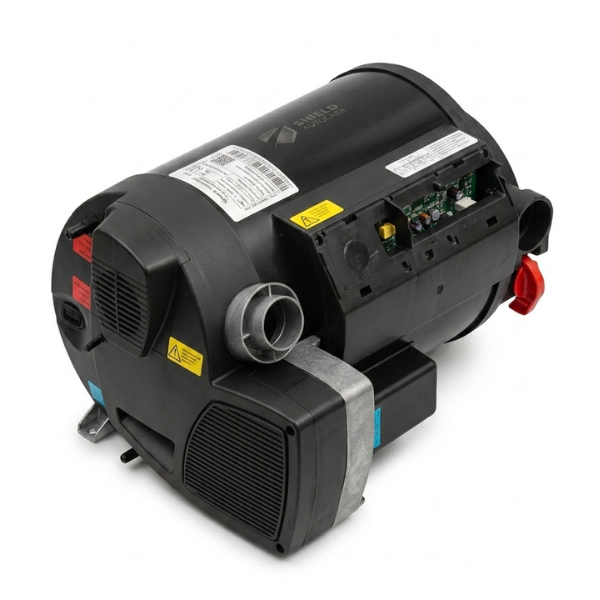
Fitting a van out for cold weather usually means finding room for two appliances. One warms the living area, another looks after hot water, and each needs its own mounting position, wiring and plumbing. This unit replaces both.
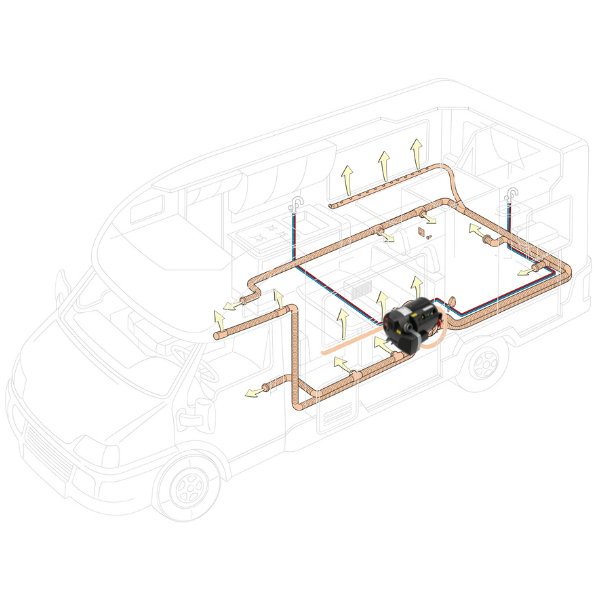
Warm air leaves through four ducted connections, so heat can be spread around the van rather than concentrated at one grille. Hot water comes from a 10 litre tank inside the casing, ready for the sink and shower.
Power comes from diesel, from a 230V hook-up, or from the two working alongside each other. A backlit rotary control panel governs the lot, and Bluetooth allows the same functions from a phone.
The intake and exhaust assembly supplied with the heater is a silenced design, which keeps noise down when the burner runs overnight.
Key Benefits
- Frees up storage. One appliance rather than two, in a footprint about the size of a small under-seat locker.
- Independent of hook-ups. Diesel operation means heat and hot water wherever the van is parked.
- Cheap to run on fuel. Between 0.1 and 0.5 litres an hour, so a modest tank covers a long weekend.
- Saves fuel on site. The mains element takes over when electric is available.
- Even heat throughout. Four outlets let ducting reach the seating area, bed and washroom separately.
- Quieter at night. The silenced exhaust assembly is included rather than an extra.
- Warm before you arrive. The timer brings the van up to temperature ahead of you getting back.
- Fits with what you already have. Fuel pump, lines, filter, ducting, vents and cowl all come in the box.
Features
Choosing What Gets Heated
Water alone. The tank heats while the warm air side stays off, useful in milder weather when all you want is a shower.
Air alone. The living space heats without warming water, for when the tank has been drained or nobody needs it.
Both together. Room and water heat at the same time, with the living space taking priority so the van stays warm rather than the heater chasing two targets.
Choosing the Power Source
| Setting | What It Uses |
|---|---|
| GAS | Diesel on its own |
| EL 1 | 900W from the mains |
| EL 2 | 1800W from the mains |
| MIX 1 | Diesel together with 900W mains |
| MIX 2 | Diesel together with 1800W mains |
One point to be aware of before you switch on for the first time: the diesel setting appears on screen as GAS. That is simply the manufacturer wording for fuel mode. The heater takes diesel and nothing else, and will not run on LPG or bottled gas.
The two mains levels exist so you can match the heater to the pitch you have been given. On a low-rated bollard, 900W avoids tripping the supply while everything else in the van is running.
Hot Water Levels
Eco holds the tank at around 40°C, which suits washing up and uses the least energy.
Hot takes it to 60°C for showering.
Boost puts water first for 40 minutes, or until the tank reaches 60°C, for when somebody wants a shower sooner than the normal cycle would manage.
Fan Speeds
Six positions are available. Off stops the fan entirely. Vent circulates air without heating and has ten levels of its own. Eco is the quietest heating speed and suits overnight running. Low sits in the middle, High moves the most air, and Boost is for bringing a cold van up to temperature quickly. High and Boost draw more current and make more noise, so most owners settle on Eco once the van is warm.
The Control Panel
A 3.5 inch backlit screen in English, worked entirely through one rotary knob and a back button. Room temperature is set anywhere between 5°C and 30°C in single degree steps.
Beyond the heating controls, the panel reports battery voltage, outside air temperature and atmospheric pressure, and shows a numbered code if a fault occurs, which saves guesswork if you need to call an installer. Backlight brightness has ten levels, the clock runs in 12 or 24 hour format, and temperature can be shown in Celsius or Fahrenheit.
A 6 metre lead is supplied. The panel needs an 84 x 74mm cut-out wherever you decide to mount it.
Timer
Start and finish times can be programmed along with the temperature, water level, power source and fan speed for that period. It is the feature most owners end up using every day through winter.
Bluetooth
An app for Android and iPhone operates the heater and handles software updates. Bluetooth can be turned off from the control panel if you would rather not have it active.
Protection Built In
- Temperature sensors on both the warm air outlet and the water tank
- An independent cut-out on the mains heating circuit that resets itself once the tank cools
- Flame detection on the burner, with fault reporting
- Protection against reversed polarity on the 12V feed
- Monitoring of supply voltage in both directions
- Numbered fault codes on the display for diagnosis
- A connection for a window switch, which shuts the heater down if a window near the exhaust is opened
Specifications
| Specification | Detail |
|---|---|
| Maximum combined output | 6kW |
| Diesel burner output | 2kW / 4kW |
| Mains element output | 900W or 1800W, selectable |
| Fuel | Commercial diesel |
| Fuel consumption | 0.1 – 0.5 litres per hour |
| DC supply | 12V DC, operating range 10.5 – 16V |
| DC consumption | 9 – 42W |
| AC supply | 220 – 240V, 50Hz |
| Hot water tank | 10 litres |
| Water settings | 40°C, 60°C, Boost |
| Water connections | 10mm stainless steel straight pipe |
| Max inlet pressure | 0.28 MPa (2.8 bar) |
| Max system pressure | 0.45 MPa (4.5 bar) |
| Warm air outlets | 4 |
| Ducting | 65mm outer, 60mm inner diameter |
| Air delivery | 287 m³/h maximum |
| Room temperature range | 5°C – 30°C, 1°C steps |
| Dimensions | 510 x 450 x 300mm |
| Weight | 15.6kg empty |
| Ingress protection | IP21 |
| Approvals | CE marked, certified for indoor installation |
| Control panel | 3.5 inch backlit LCD, 92 x 103 x 40mm, 84 x 74mm cut-out, 6m lead |
| Warranty | 12 months on the main heater unit |
| SKU | TRU.HEAT.COMBI.DSL.EL |
Compatibility
Intended for campervans, motorhomes and similar leisure vehicle conversions running a 12V system. Check your build can accommodate the following before ordering.
- Floor space of at least 500 x 350mm with 540mm depth clearance, on a load-bearing or double floor. Where the existing floor will not carry it, a plywood bearing surface has to be built first.
- A wall or roof panel suitable for the exhaust cowl, sited 300mm clear of any opening window and 500mm clear of a fuel filler or tank breather.
- A dedicated diesel tank, with a route for fuel line of between 2 and 7 metres from pump to heater.
- A 12V leisure battery system with capacity for the heater on top of your other loads.
- Fresh water with a pump, and pipework rated for drinking water above 4.5 bar and above 80°C.
The mains functions need a 230V hook-up to work. The diesel side does not, so the heater remains fully usable parked anywhere.
Fuel must be commercial diesel. Biofuels are unsuitable. Through winter, use a grade rated for low temperatures.
Package Contents
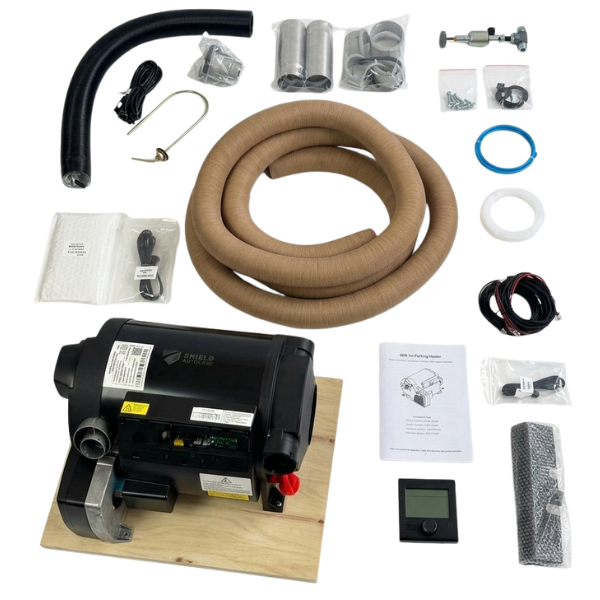
Supplied in two boxes.
Heater Box
- Main heater unit and controller cover
- 3.5 inch English LCD control panel with 6 metre lead
- 12V power cable, 4 metres
- External room temperature sensor with 4 metre lead
- Mounting screws, nuts, washers and gaskets
- Ten UV-resistant cable ties
- English instruction manual
Accessory Box
- Silenced combined intake and exhaust assembly, 110 x 1060mm
- Cowl body and cover with silicone sealing gasket
- Intake fixing clip and exhaust fixing hook
- Seven hose clamps across three sizes
- Warm air ducting, two 4 metre lengths
- Four adjustable warm air vents and four ducting clips
- 12V diesel fuel pump with rubber mounting sleeve
- Fuel pump wiring loom, 6.8 metres
- Fuel filter and 600mm suction pipe
- Nylon fuel line, 6.8 metre and 1.2 metre runs
- Fuel pipe connectors and clamps
- Assorted self-tapping and self-drilling fixing screws
The 8 metres of ducting is cut to length during fitting so that all four outlets are fed.
Installation Information
We strongly recommend having this heater fitted by a qualified installer with experience of leisure vehicle heating systems.
This is not a bolt-in accessory. Fitting it involves running a diesel supply, cutting an 83mm opening through the bodywork for the exhaust, plumbing into a pressurised water system and wiring into both the 12V and 230V sides of the van. Mistakes in any of those areas carry consequences ranging from water damage through to fire or carbon monoxide entering the living space.
The requirements below are set out so you can judge the work involved before ordering.
Mounting
- Fixed down to a load-bearing floor or double floor, with a plywood bearing surface built first where none exists
- A retaining batten fitted 180mm from the floor, running across the direction of travel
- Positioned centrally where possible, which evens out the ducting runs
- Nothing placed on top of the unit, and no heat-sensitive or flammable items in the same compartment
Exhaust and Air Intake
- The cowl sits on a side wall or roof panel and needs an 83mm hole
- The combined intake and exhaust run measures between 60cm and 100cm
- The cowl must not sit more than 20cm below the heater outlet
- Clearances of 300mm from any ventilation opening and 500mm from a fuel filler or tank breather
- Where the cowl ends up below a window that opens, a window switch is required so the heater stops automatically
Warm Air Ducting
- All four outlets have to be connected. Blanking one off restricts airflow and will eventually trip the heater on an overheat fault.
- An opening of at least 150cm² is needed between the living space and the heater so it can draw recirculating air
- Runs shorter than 50cm need a siphon between the connector and the outlet, which stops unwanted heat reaching the van in summer
Fuel System
- Tank to pump: 0.5 to 1.2 metres. Pump to heater: 2 to 7 metres.
- The pump mounts at 15 to 35 degrees with its outlet tilted upwards, sited away from the exhaust
- The filter goes ahead of the pump inlet, mounted vertically
- Fuel line clipped at no more than 50cm intervals and protected from heat and road debris
Water System
- A 0.35 MPa pressure relief valve has to be fitted. Without one, thermal expansion can push system pressure to 4.5 bar.
- Supply pressure must stay below 2.8 bar, so a pressure reducer is needed on a mains water connection
- Pipework must be suitable for drinking water and rated above 4.5 bar and above 80°C
Electrical
- Cable sizing by total run: 2.5mm² up to 8 metres, 4mm² from 8 to 12 metres, 6mm² from 12 to 16 metres
- The external room temperature sensor stays connected permanently or the heater reports a fault. It goes on a vertical surface with air moving around it, out of direct heat, and above the entrance door works well.
- Where no window switch is fitted, the factory jumper wire stays in place
- Cables routed with a downward loop before entering the heater, so condensation cannot run into the unit
Additional Information
Frost
Empty the tank whenever the heater is standing unused and temperatures could fall below 3°C. Open the safety and drain valve with the taps open, and check the full 10 litres has come out. Frost damage to the tank falls outside the warranty, and it is the most common avoidable failure on any van water heater.
Running Safely
- Never run the heater in a garage, workshop or on a ferry deck. Exhaust gases are dangerous in an enclosed space, so cancel any timer setting before parking indoors.
- Switch the heater off before refuelling
- Keep the cowl clear of snow, ice, mud and fallen leaves
- Leave the warm air outlets and circulating air intake unobstructed
- The wall around the cowl gets hot while the heater is running
- A little smell or smoke during the first few minutes of the first use, or after a long lay-up, is normal
Servicing
- A service before each heating season, covering the air inlet and outlet, intake and exhaust pipework, electrical connections and fuel lines
- Clean the water tank at least twice a year, and flush it before first use
- During a long lay-up, run the heater for around ten minutes every four weeks so the fuel pump and combustion fan do not seize
- Replace the fuel filter every two years along with its connector and clip
- The heat exchanger and exhaust pipe are due for renewal after ten years
Warranty
Twelve months on the main heater unit. Frost damage, incorrect installation, modification and the use of non-supplied parts are excluded.
Related Products


Price range: £189.99 through £329.99




Price range: £349.99 through £499.99