
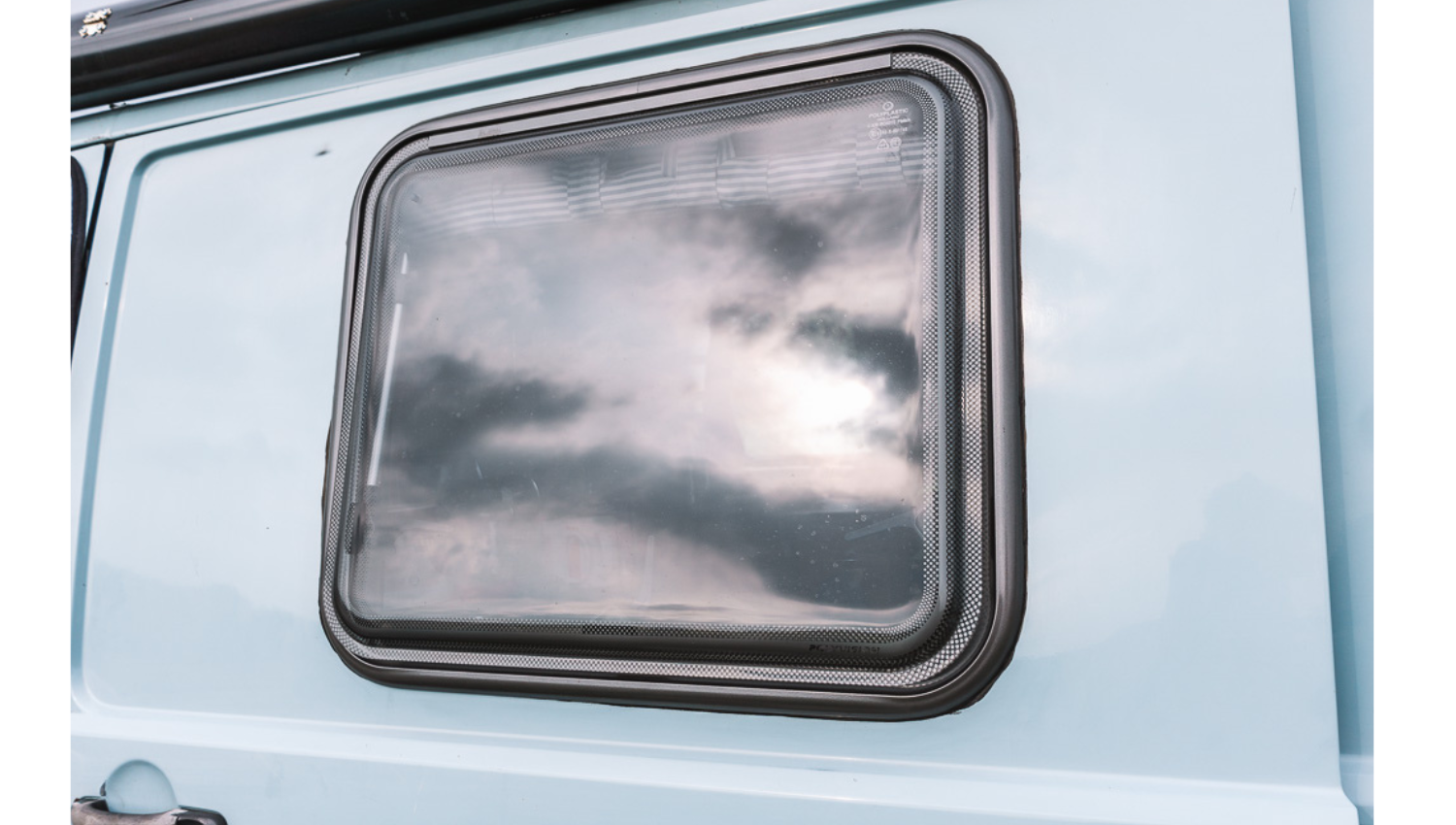
When converting a van into a campervan, one of the most important decisions involves selecting the right windows.
Windows provide natural light, fresh air, and views of the outdoors, while also playing a key role in insulation, ventilation, and the overall comfort of the living space.
For those undertaking their first conversion, the choice often comes down to two main options: glass windows (typically tempered and bonded) or acrylic windows (often double-glazed with a frame).
This article compares the two materials in detail, outlining their advantages and disadvantages. It aims to help beginners understand the key differences and make an informed choice based on their specific needs, such as climate, budget, weight considerations, and desired aesthetics.
Why Windows Matter in a Campervan Conversion
Windows do more than simply allow light to enter. They enable cross-ventilation to reduce moisture and prevent condensation, which is a frequent challenge in compact, enclosed spaces.
Good windows also contribute to thermal efficiency, helping maintain a comfortable interior temperature whether in cold winters or hot summers. In many regions, properly installed windows are required for reclassification or insurance purposes, and they must meet relevant safety standards.
The two primary types differ significantly in construction. Bonded glass windows sit flush with the van’s body for a seamless, factory-like appearance. Acrylic windows, by contrast, are usually framed units that protrude slightly and often feature double glazing for improved performance.
Understanding Glass Windows
Glass windows in campervan conversions are generally made from tempered glass, which is strengthened through heat treatment. These are commonly bonded directly to the van’s metal panels using specialist adhesives, creating a flush installation.
Tempered glass provides excellent optical clarity with minimal distortion, allowing sharp, undistorted views. It is highly resistant to scratching under normal use and cleaning, maintaining its appearance over many years.
Pros and Cons of Glass Windows
Pros:
- Superior scratch resistance and long-term clarity, as glass withstands abrasive cleaning better than most plastics.
- A sleek, integrated look that sits flush with the van body, often preferred for a discreet or professional finish.
- Good sound insulation in some setups, helping to reduce external noise.
- Potentially higher perceived value for resale, as glass is seen as a premium material in many vehicle contexts.
Cons:
- Heavier weight, which can impact fuel efficiency, payload capacity, and handling, particularly in smaller vans.
- Single glazing in most bonded installations leads to poorer thermal performance; glass conducts heat readily, resulting in cold surfaces in winter and heat gain in summer.
- Higher risk of condensation, as the cold glass surface promotes moisture build up inside the van.
- More prone to shattering on impact, though tempered glass breaks into small, safer pieces rather than sharp shards.
- Installation is more complex, often requiring precise cutting, bonding, and sealing to prevent leaks; it may be best suited to experienced installers.
- While glass offers durability and aesthetics, its thermal drawbacks can make it less ideal for full-time or all-season use.
Understanding Acrylic Windows
Acrylic windows, sometimes called polyplastic or PMMA, are a lightweight plastic material widely used in recreational vehicles. Popular brands offer double-glazed units with aluminium frames, integrated blinds, flyscreens, and opening mechanisms such as hinged or awning styles, giving you a range of options to personalise your conversion, you can check out the campervan window options that we have here.
These windows are typically double-paned, with an air or gas-filled gap that improves insulation.
They are designed specifically for motorhomes and campervans, meeting European safety standards.
Pros and Cons of Acrylic Windows
Pros:
- Significantly lighter weight compared to glass, which helps preserve payload, improves fuel economy, and eases handling during installation.
- Excellent thermal insulation from double glazing; acrylic is a poorer conductor of heat than glass, reducing heat loss in winter and heat gain in summer.
- Reduced condensation, as the insulated panes stay warmer and resist internal moisture build up.
- Higher impact resistance and shatterproof qualities; acrylic cracks rather than shattering into dangerous pieces, enhancing safety.
- Better ventilation options in many models, with larger opening areas and adjustable positions for airflow.
- Often include integrated features like pleated blinds and insect screens, simplifying the build process.
Cons:
- More susceptible to scratching if cleaned improperly (e.g., using abrasive materials); special non-abrasive cleaners are recommended to maintain clarity.
- Slightly lower optical clarity in some cases, with potential for minor distortion or yellowing over time if not UV-protected.
- Protruding frame design, which may not achieve the flush, stealth appearance of bonded glass.
- Potentially higher upfront cost for premium double-glazed models, though long-term energy savings can offset this.
- Acrylic windows excel in practical performance for living comfort, especially in varying climates.
Which Is the Best Option?
For the majority of people converting a van into a campervan—particularly beginners or those planning to use it regularly in different weather conditions—acrylic windows are generally the better choice.
The superior insulation, reduced weight, and lower condensation make daily living more comfortable and efficient. Features like integrated blinds and screens add convenience without extra work.
That said, glass windows may suit specific preferences. If a flush, factory-style appearance is a priority (for example, for a stealthier look in urban areas) and the van will see mostly mild climates with good ventilation elsewhere, bonded glass can work well.
Ultimately, the decision depends on priorities: thermal performance and practicality favour acrylic, while aesthetics and scratch resistance favour glass.
Many experienced converters and manufacturers have shifted toward acrylic for its overall benefits in real-world use.
Before purchasing, measure carefully, check compatibility with your van model, and source from reputable suppliers to ensure compliance and quality, you can find our campervan windows here.
With the right windows, your campervan will feel brighter, more comfortable, and truly ready for the road.
About the author : Shield Auto Care

Related posts

Popular products
-
 Fully Tailored HD Boot Liner For Land Rover Discovery 4 2009-2016
£39.99
Fully Tailored HD Boot Liner For Land Rover Discovery 4 2009-2016
£39.99
-
 Universal Heavy Duty Waterproof Car Cover
Original price was: £44.99.£39.99Current price is: £39.99.
Universal Heavy Duty Waterproof Car Cover
Original price was: £44.99.£39.99Current price is: £39.99.


